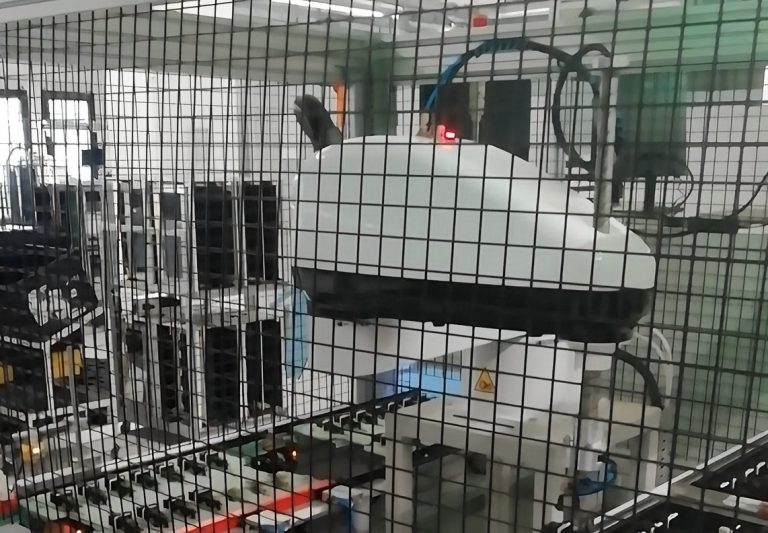
Industrial Material Handling Robot Arms & Automated Systems
Boost your factory throughput and operational efficiency with our precision-engineered material handling robot arms. From high-speed pick and place tasks to heavy-duty automated palletizing, we provide end-to-end robotic solutions tailored to your production flow.
Key Benefits (Bullet points for quick scanning):
- Enhanced Productivity: Reduce cycle times with high-speed automated loading, unloading, and sorting.
- Versatile Integration: Seamlessly compatible with major WMS/MES systems and industry-standard PLCs.
- Scalable Automation: Modular designs that grow with your warehouse and logistics needs.
- Enhanced Safety: Minimize workplace injuries by offloading repetitive and heavy lifting tasks.
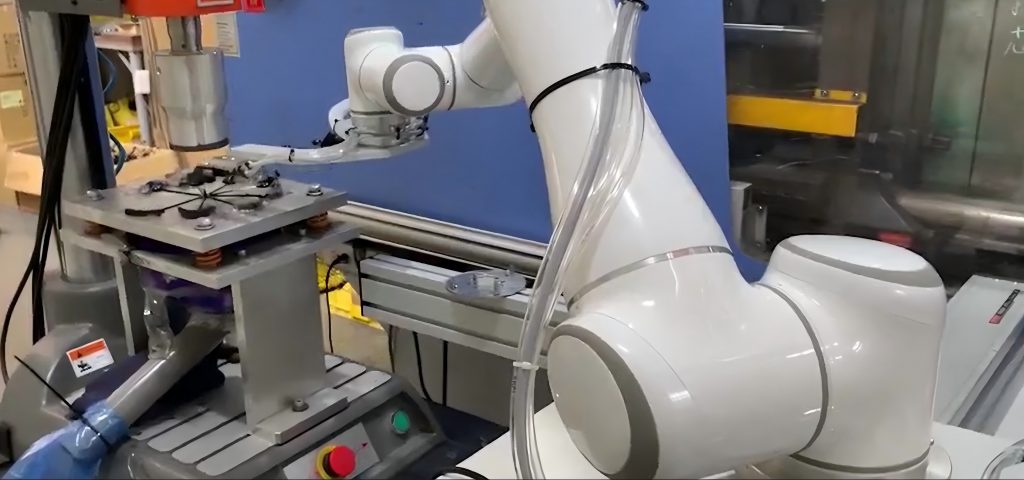
Material Handling Robots and Automation Systems
In recent years, material handling robots have become a big part of how factories and warehouses move things around. These robots are not just machines with arms — they are systems that can pick, lift, and transfer materials in a faster and more consistent way than before. When you add sensors or different end tools, one robot can do many different jobs, from loading boxes to sorting and stacking parts. The main purpose is to make the process faster, safer, and easier for people on the production floor.
Why Companies Use Handling Robots Today
More manufacturers and logistics operators are turning to handling robots and robotic material handling systems because they solve real problems on the shop floor. A handling robot can prevent repetitive-injury risks, free up staff for higher-value tasks, and keep output predictable across long shifts. Whether the need is a mobile material handling robot that moves inventory between cells, or a fixed arm that performs high-speed palletizing, these solutions reduce downtime and help meet tight delivery schedules.
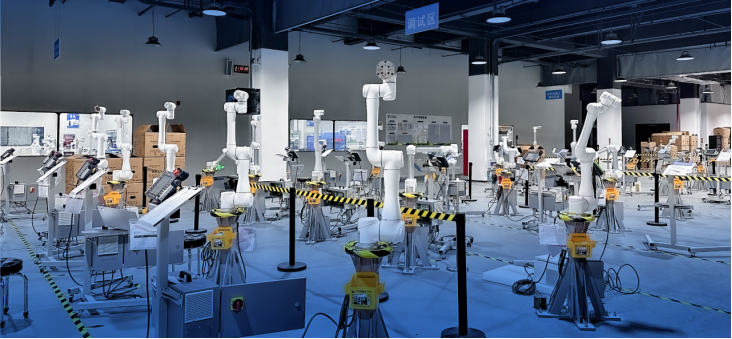
Common Types of Material Handling Robots
Material handling robots vary widely depending on where they work and what they handle. Below are the most common categories you’ll see in industry.
1 .Warehouse and Logistics Robots (AMR & ACR)
Warehouse robots — including AMR material handling platforms and autonomous case handling robots — are built to transport, pick, or shuttle items across distribution centers. These systems often pair with robotic racking systems and fleet-management software to coordinate dozens of units at once. Vendors such as HAI Robotics (ACR systems) and Bastian Solutions mobile robotics provide turnkey autonomous material handling solutions for high-volume warehouses.
2 .Production Line Material Handling Robots
On production lines, robots focus on speed, repeatability, and small-footprint installation. Fanuc material handling robots, Motoman GP180-120 models, and Yaskawa handling robots are frequently used for loading, feeding, and assembly tasks. Using simulation tools such as Roboguide Handling Pro helps engineers program and validate motion paths before a robot ever touches a part, cutting commissioning time significantly.
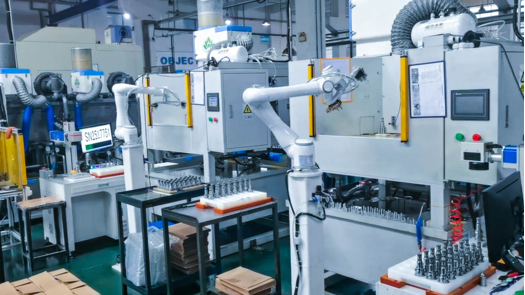
3 .Robots for Harsh or Specialized Environments
Some environments require specially designed systems — glass handling robots for delicate panes, HRS robotic handling systems for high-temperature foundries, or Festo Bionic Handling Assistants for collaborative, lightweight manipulation. These robots are built with protective casings, special materials, and sealed interfaces so they continue operating reliably where human presence is limited or unsafe.
Industry-Leading Robotics & Automation Partnerships
Our material handling solutions are built on a foundation of proven technology. We integrate high-performance systems from world-class robotics manufacturers to ensure reliability, precision, and scalability for your production floor.
| Category | Brand / Series | Primary Applications |
| Industrial Robot Arms | FANUC (Handling Pro / Roboguide) | High-speed palletizing, assembly, and pick-and-place tasks. |
| Heavy-Duty Robotics | Yaskawa Motoman (GP180-120) | High-payload handling, fast cycle times, and heavy lifting. |
| Warehouse Automation | HAI Robotics (ACR Systems) | Autonomous case handling, fleet coordination, and storage optimization. |
| Collaborative Robotics | Festo (Bionic Handling Assistant) | Sensitive, flexible, and human-collaborative manipulation. |
| Mobile Robotics | Bastian Solutions | Autonomous material transport and intelligent fleet management. |
| Lab Automation | Opentrons / Agilent (Bravo) | Precision liquid handling, pipetting, and high-throughput assays. |
Robotic Palletizing and Stacking Systems
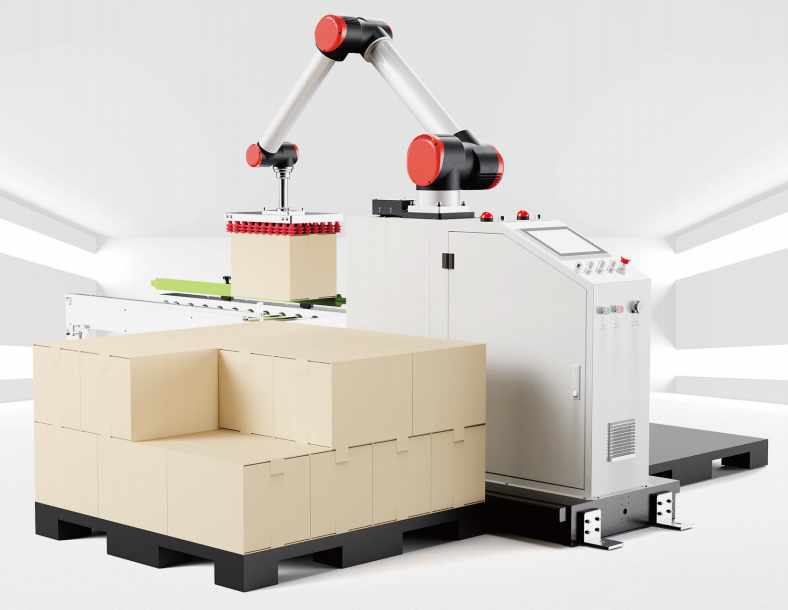
Automated palletizing systems are central to modern packaging lines. Robotic palletizing systems and robot stackers can pick products from conveyors and arrange them into optimized pallet patterns. Autonomous pallet handling units work with vision systems and intelligent software to balance speed and stability. Companies such as Bastian Solutions Robotics and FANUC offer palletizing cells that integrate conveyors, stretch-wrapping stations, and automatic labeling to create end-to-end pallet lines.
Liquid Handling Robots for Labs and Production
It’s not just warehouses — automation reaches into labs as well. Open source liquid handling robot platforms like Opentrons liquid handler and commercial systems such as the Agilent Bravo automated liquid handling platform automate repetitive pipetting and liquid transfer tasks. These robotic liquid systems increase reproducibility, reduce human error in assays, and allow lab staff to focus on data interpretation rather than manual processing.
Integration and Software — The Glue That Binds Systems
The real value of robotic material handling equipment comes from tight integration: conveyors, sensors, vision systems, warehouse-management software, and robot controllers must work together. Modern implementations use IoT connectivity and cloud analytics to monitor fleets, predict maintenance, and optimize throughput. For example, a combined system might route an autonomous case handling robot to pick a pallet, hand it off to an automated palletizing system, and then send the completed pallet through an automated racking system.
Benefits of Adopting Robotic Material Handling
• Increased throughput and uptime — robots can operate continuously and repeatably.
• Improved safety — heavy lifting and hazardous tasks are offloaded from workers.
• Better space utilization — robotic racking systems and optimized palletizing save floor area.
• Higher consistency — automated material handling reduces human error.
• Faster scalability — modular robotic material handling systems can be expanded as demand grows.
Practical Examples and Brand References
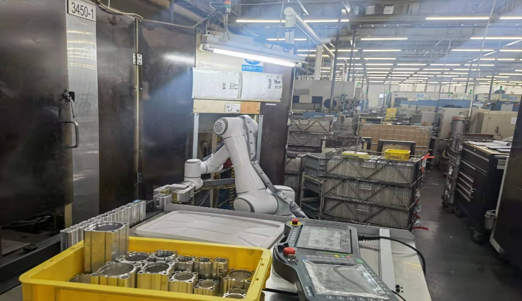
• FANUC handling pro and Roboguide Handling Pro are widely adopted for high-speed palletizing and precise production-line tasks.
• Motoman GP180-120 is used where high payload and quick cycle times are required.
• HAI Robotics (ACR) and Bastian Solutions mobile robotics focus heavily on warehouse automation, fleet coordination, and autonomous material transfer.
• Opentrons liquid handling robot and Agilent Bravo platforms illustrate how robotics improves lab throughput and reproducibility.
• Festo Bionic Handling Assistant demonstrates how bio-inspired designs bring safer, softer interaction options for delicate handling.
Future Trends in Material Handling Robotics
The future points toward more autonomous systems, deeper AI-driven decision-making, and better human-robot collaboration. Expect to see broader adoption of mobile material handling robots, improved vision-based picking, and tighter coupling between warehouse-management platforms and robot controllers. As robotic material handling systems become smarter, companies can run leaner operations while increasing flexibility and responsiveness to market changes
How to Assess Your Needs
If you’re evaluating material handling automation, consider these steps:
- Map your process flows and identify the high-frequency, low-value tasks.
- Decide whether you need stationary arms, mobile AMRs, or an integrated palletizing cell.
- Run a pilot project with a limited number of units to measure real gains.
- Use simulation tools (for instance, Roboguide Handling Pro) when possible to test layouts.
- Plan for integration with existing WMS or MES systems.